Addall: The “Gas-Station Adderall” Sold With No Age Restrictions
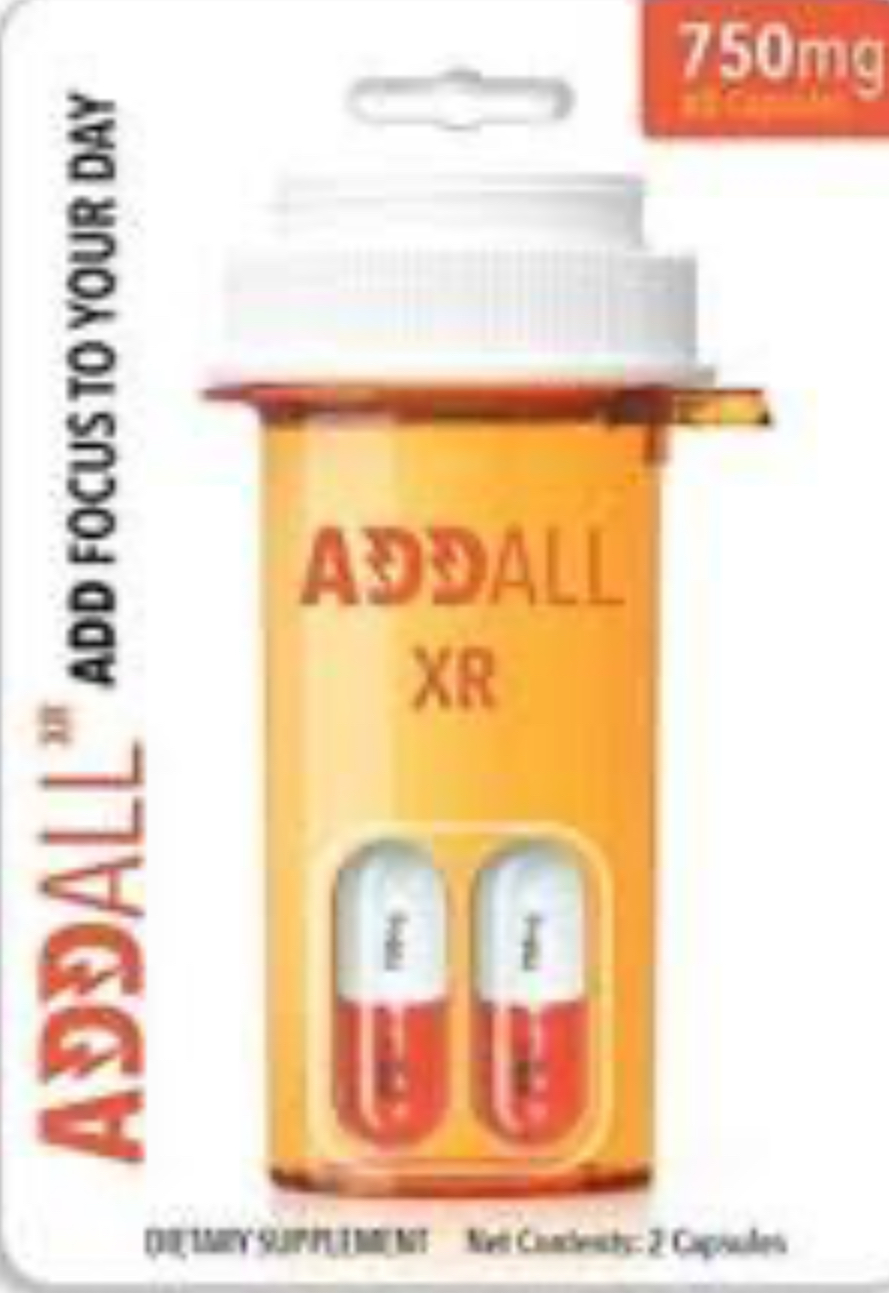
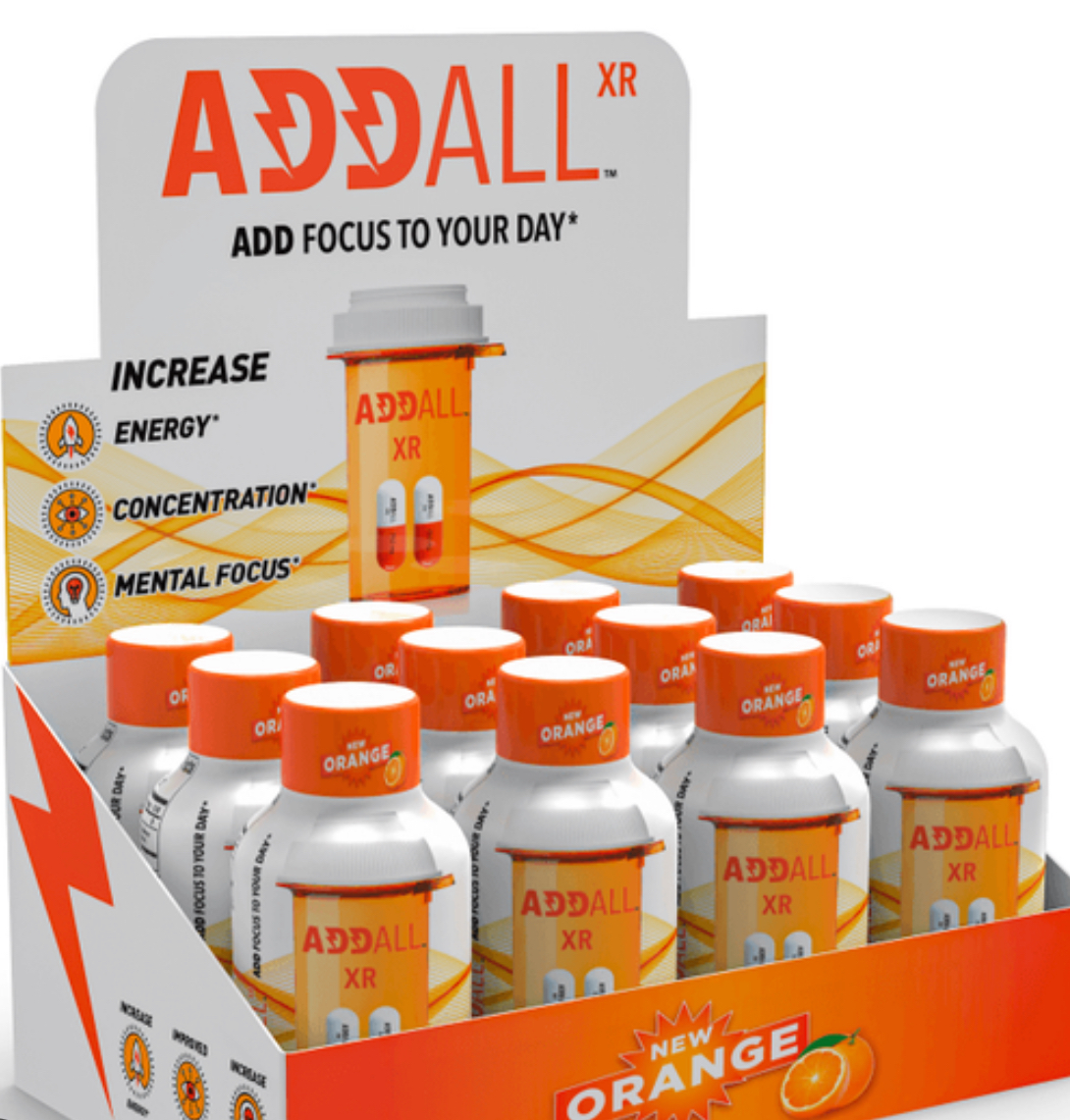
What every parent needs to know about this unregulated brain-booster being sold next to vape pens and energy shots.
If you’ve walked into a gas station, vape shop, or corner store lately, you’ve probably noticed small yellow bottles or bright orange capsules labeled Addall XR, Addall Liquid Shots, or Addall Mushroom Boost.
They’re marketed as:
- “Brain boosters”
- “Focus and energy”
- “Like Adderall but natural”
But here’s what most parents don’t realize:
Addall is an unregulated stimulant cocktail with no age restrictions whatsoever.
Teens can buy it as easily as they buy gum.
Below is a breakdown of the ingredients commonly found in Addall products—and why each one can be harmful, especially for young people.
1. GABA (Gamma-Aminobutyric Acid)
Often listed as:
- GABA
- Beta-Phenyl-GABA
- Phenibut analogs
GABA is a neurotransmitter your brain uses to slow down nerve activity. When taken in supplement form—especially in modified versions like Beta-Phenyl-GABA—it can cause:
- Sedation
- Dizziness
- Mood swings
- Dependence in some formulations
- Withdrawal symptoms (yes, even from “over-the-counter” products)
These gas-station versions are not medically approved, and some forms are chemically similar to phenibut, a substance linked to severe withdrawal and ER visits.
For a teenager, combining GABA derivatives with stimulants can cause erratic behavior, emotional crashes, and dangerous swings in alertness.
2. Caffeine (Often in Extremely High Doses)
Addall products stack caffeine on top of other stimulants. Gas-station shots may contain the equivalent of:
☕ 2–4 cups of coffee in one bottle
Risks for teens include:
- Rapid heart rate
- High blood pressure
- Anxiety and panic episodes
- Sleep disruption
- Irritability and mood instability
- Potential for cardiac arrhythmia in vulnerable individuals
3. B Vitamins (B1, B2, B6)
These are often added to give the product a “health halo.” But in Addall bottles, they are used for stimulant stacking, not nutrition.
Large doses can cause:
- Nausea
- Headaches
- Nerve irritation (with excessive B6)
They do not make the product safe.
4. Bacopa Monnieri (“Brahmi”)
Marketed as a “natural memory herb,” but:
- Not FDA-approved
- Not tested in teens
- Can cause GI upset, nausea, slowed heart rate, and sedation
When mixed with stimulants, Bacopa can create a push-pull effect—sedative on one side, stimulant on the other—which increases risk for unpredictable behavior and adverse reactions.
5. DMAA (1,3-Dimethylamylamine or Similar Stimulants)
This is the most concerning ingredient sometimes found in Addall shots.
DMAA has been the subject of multiple FDA warnings for:
- Elevated blood pressure
- Cardiac stress
- Irregular heartbeat
- Shortness of breath
- Neurological symptoms (headache, confusion, agitation)
It has been linked to:
- Hospitalizations
- Seizures
- Strokes
- Deaths in extreme cases, especially during physical exertion
DMAA is not a legal dietary ingredient. Any product containing it is, by law, adulterated and misbranded.
Yet teens can buy this at the gas station with no ID check.
6. Choline
Often marketed as “good for the brain,” but in an unregulated stimulant product, choline can cause:
- Headaches
- Sweating
- Drop in blood pressure
- Nausea
On its own it is rarely harmful—but combined with DMAA, caffeine, and GABA derivatives, it increases the load on the nervous system.
7. Artificial Sweeteners, Preservatives & Flavor Chemicals
Addall oral liquid shots often include:
- Sucralose
- Sodium benzoate
- Potassium sorbate
- Artificial flavors
Not inherently dangerous, but the presence of these additives highlights something important:
These products are not tested as drugs, not evaluated for safety, and not approved for any medical use.
They are built for marketing, not safety.
No Age Limits. No Safety Testing. No Consumer Warnings.
Every parent should know:
❗ Addall is sold with zero age restrictions.
❗ Teens can buy it in stores where shelves are filled with kratom, tianeptine, Amanita mushrooms, and phenibut derivatives.
❗ There is no requirement for safety testing, dosage limits, or long-term studies.
❗ The ingredients vary wildly between bottles, batches, and stores.
Parents assume a product in a gas station must be safe.
It isn’t.
Not even close.
What Parents Should Watch For
Signs your teen may be using Addall or other gas-station stimulants:
- Sudden bursts of energy followed by crashes
- Irritability or agitation
- Shakiness
- Insomnia
- Dilated pupils
- Nausea/vomiting
- Panic attacks or heart palpitations
- New bottles labeled “focus,” “energy,” “extreme,” “XR,” or “brain boost”
Teens frequently mix Addall with:
- Energy drinks
- Pre-workout powders
- Vape nicotine
This combination dramatically increases risk of cardiac events.
Why These Gas-Station Products Are Still on Shelves
Because they fit into a regulatory loophole:
- Not approved as drugs
- Not legal as dietary supplements
- Not banned explicitly in many states
- And no ID is required
The result?
Children and teenagers become the test subjects.
Final Message for Parents
Addall is marketed as a harmless “brain booster,” but its ingredients tell a different story: unapproved stimulants, caffeine overload, sedative-stimulant combinations, and chemicals that haven’t been tested in youth.
Talk to your teen.
Watch the convenience-store shelves.
And demand that your state close the loopholes that allow pharmacy-strength stimulants to be sold to minors behind the counter of a gas station.
Take Action
- Tell lawmakers to regulate or ban Addall as an unapproved stimulant product sold to minors.
- Use MAHA’s Form Letters to demand enforcement of state FD&C Acts.
→ Send a Letter - Warn other parents by sharing this link and the images above.